
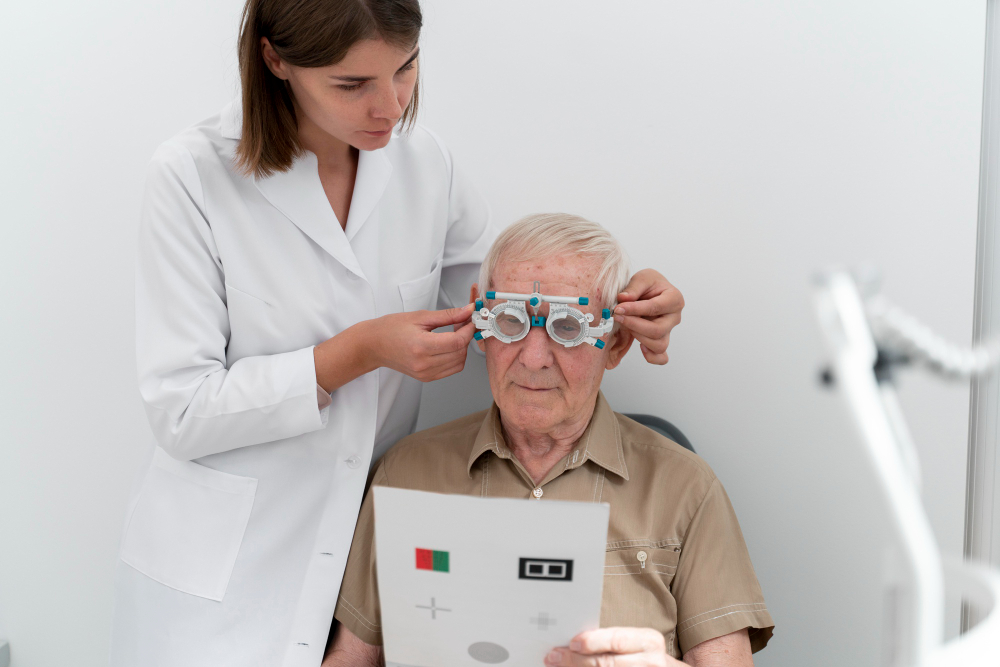
Are your eyes not feeling the same lately?
Are road signs a little harder to read while driving?
Do you need to blink more when you check your phone or newspaper?
And those night lights… somehow sharper, brighter, more uncomfortable
than before?
Most people don’t think much of it. Life is busy, and changes like this
are often brushed off as age or tired eyes.
But sometimes, it is something else.
If these small changes are becoming familiar, cataracts could be one
reason.
Inside the eye, there is a natural lens. It is supposed to stay clear.
With time, this lens can slowly turn cloudy. When that happens, vision doesn’t
feel sharp anymore. Things start to look dull or blurred, almost like looking
through a foggy glass.
What makes things more confusing is everything people hear about it.
A relative gives advice. A neighbor shares a story. Someone who had
surgery years ago describes their experience, even if things are very different
today.
Slowly, it all mixes together. Truth, half-truth, and old beliefs.
And that is where most confusion begins.
Below are some common things people still believe about cataracts—and
what is actually true.
|
Myth |
What Is Actually True |
|
Cataracts only affect old people. |
Age increases the risk, but cataracts can develop earlier too.
Diabetes, eye injuries, and certain health conditions can increase the
chances. |
|
Cataracts can spread from one eye to the other. |
Cataracts do not spread. If both eyes develop cataracts, each eye is
affected independently. |
|
Reading too much causes cataracts. |
Reading does not cause cataracts. Many people notice reading
difficulties because a cataract is already developing. |
|
Cataracts can be cured with eye drops. |
Eye drops cannot remove a cataract. Once the lens becomes cloudy, the
cataract does not disappear with medication. |
|
Cataracts must become fully mature before surgery. |
Modern treatment is based more on how cataracts affect daily life than
on waiting for them to become "mature." |
|
Cataract surgery is risky and painful. |
Modern cataract surgery is a commonly performed procedure and causes
little discomfort for most patients. |
|
Cataracts grow back after surgery. |
Once a cataract is removed, it does not return. |
|
If you can still see a little, treatment is unnecessary. |
Many people continue to manage with reduced vision for years. The real
question is how well you are seeing, not whether you can see something. |
|
Wearing glasses can prevent cataracts. |
Glasses may improve vision temporarily but cannot stop cataracts from
developing. |
|
Cataract surgery requires a long hospital stay. |
Most patients return home the same day after surgery. |
The strange thing is how easily these beliefs travel.
Someone hears it once and repeats it. Someone else adds their own
experience. And suddenly, it becomes “common knowledge.”
A person in their fifties might ignore early signs because they think
cataracts belong only to much older people.
Another might keep trying home remedies.
Some people delay everything because they are scared of surgery.
Meanwhile, life quietly changes.
Reading becomes slower. Night driving feels uncomfortable. Faces don’t
appear as clear as before. People just adjust without even realising how much
they are compensating.
By the time they seek help, they often say the same thing—“I wish I had
checked earlier.”
Eye care is not only about treatment. It is also about timing,
understanding, and clarity.
Getting the right opinion at the right time can change how someone
experiences their vision in the long run.
That is why choosing an eye hospital should never feel rushed.
It is not just about equipment or procedures. It is about whether the
person sitting across from you takes the time to explain what is actually
happening.
Whether doubts are answered properly. Whether decisions are made with
clarity instead of confusion.
Those small things matter more than most people realise.
At Tony Eye Hospital, cataract care usually starts with a simple
conversation—what the patient is noticing, what has changed, and what daily
life feels like now.
Because cataracts don’t feel the same for everyone. For some, it is
reading. For others, it is driving at night or recognising faces clearly.
The focus stays on understanding the condition clearly first, and then
deciding what comes next based on that understanding.
Just careful evaluation and clear guidance so patients know where they
stand.
Book a consultation now!