schedule OP Timing: 8AM to 7PM Monday to Saturday | Emergency Services after 7PM and Sunday

Glaucoma is a group of eye diseases that damage the optic nerve, which can lead to vision loss and blindness. It is often caused by high pressure inside the eye. It often develops slowly and is often asymptomatic. Early detection through comprehensive eye exams is critical to prevent permanent vision loss.

  • Diagnosis of Glaucoma
  • Screening of family members in glaucoma patients
  • Laser peripheral iridotomy
  • Treatment of Glaucoma

Diagnosis of Glaucoma

Diagnosing glaucoma involves a comprehensive eye examination, including:

  • Tonometry: measuring intraocular pressure (IOP)
  • Gonioscopy: examining the drainage angle
  • Ophthalmoscopy: visualizing the optic nerve and retina
  • Perimetry: assessing visual field
  • Optical Coherence Tomography (OCT): (IOL) implantation: imaging the optic nerve and retina
  • Pachymetry: measuring corneal thickness

A combination of these tests helps detect glaucoma, assess its severity, and monitor progression. Early detection and treatment can prevent vision loss and slow disease progression. Regular eye exams are essential for individuals at risk of developing glaucoma.
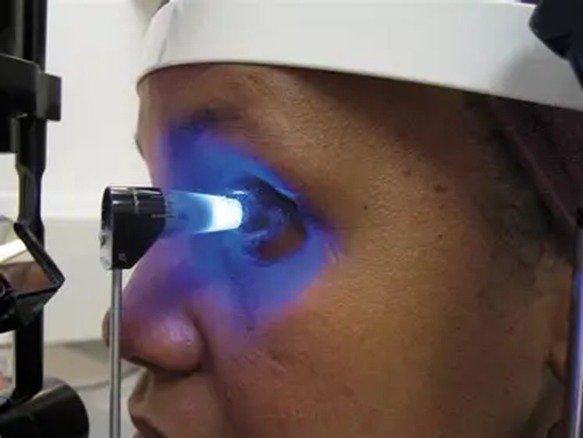
Diagnosis of Glaucoma

Screening of family members in glaucoma patients

Family screening in glaucoma is crucial because the disease tends to run in families. First-degree relatives (parents, siblings, and children) of individuals with glaucoma are at higher risk of developing the disease. In fact, they are 4-9 times more likely to develop glaucoma than the general population.

Family Screening

The American Academy of Ophthalmology recommends that:

  • First-degree relatives of individuals with glaucoma should undergo a comprehensive eye examination, including tonometry and optic nerve evaluation, every 1-2 years starting at age 40.
  • Individuals with a family history of glaucoma should be aware of their risk and inform their eye doctor about their family history. Individuals with a family history of glaucoma should be aware of their risk and inform their eye doctor about their family history.
  • Children and siblings of individuals with glaucoma should be screened for glaucoma at an earlier age, typically in their 20s and 30s.

Early detection and treatment of glaucoma can prevent vision loss and slow disease progression. Family screening is an essential step in identifying individuals at risk and providing timely intervention.

Laser peripheral iridotomy

Laser peripheral iridotomy (LPI) is a procedure used to treat angle-closure glaucoma and prevent its recurrence. The procedure involves creating a small hole in the iris, the colored part of the eye, using a laser.
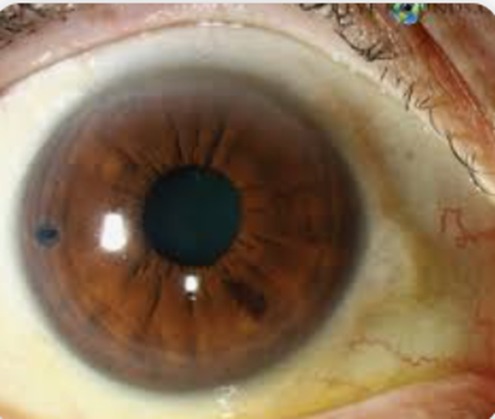
Laser peripheral iridotomy

During the procedure:

  • The eye is numbed with eye drops or a local anesthetic.
  • A laser beam is applied to the iris, creating a small hole.
  • The hole allows fluid to flow from the back of the eye to the front, reducing pressure in the eye.

The goal of LPI is to:

  • Reduce the risk of angle-closure glaucoma attacks
  • Prevent damage to the optic nerve
  • Lower eye pressure

LPI is usually performed in a doctor's office or clinic, and the procedure typically takes only a few minutes. Some patients may experience mild discomfort, blurred vision, or eye inflammation after the procedure, but these effects are usually temporary.

Treatment of glaucoma

It's essential to work closely with an eye doctor to determine the best treatment plan, as it may vary depending on the type and severity of glaucoma, as well as individual patient factors.
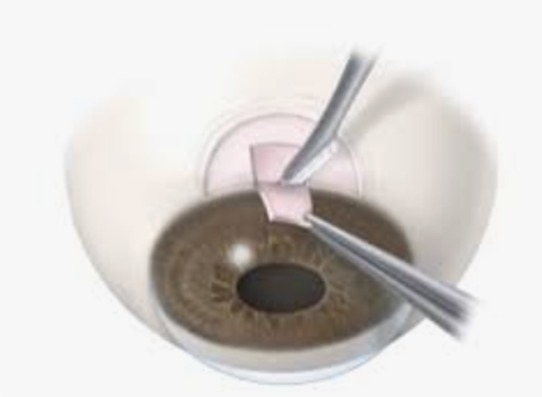
Treatment of glaucoma
  1. Eye Drops: Medications applied directly to the eye to reduce pressure. Common types include:
  2. Oral Medications: Pills or tablets that reduce eye pressure. These are usually used when eye drops are not effective or as a supplement to eye drops.
  3. Laser Surgery: Procedures that use a laser to reduce eye pressure.
  4. Incisional Surgery: Operations that create a new drainage channel to reduce eye pressure.
  5. Minimally Invasive Glaucoma Surgery (MIGS): Newer, less invasive surgical procedures that aim to reduce eye pressure with fewer risks.
  6. Combination Therapy: Using multiple treatments, such as eye drops and oral medications, or combining different types of surgery.

Doctors

Dr. Litta George

MS, FICO

stethoscope_arrow Cataract & IOL Services, Glaucoma, General Ophthalmology

event_available OP Days:

Monday,Tuesday,Thursday,Saturday